
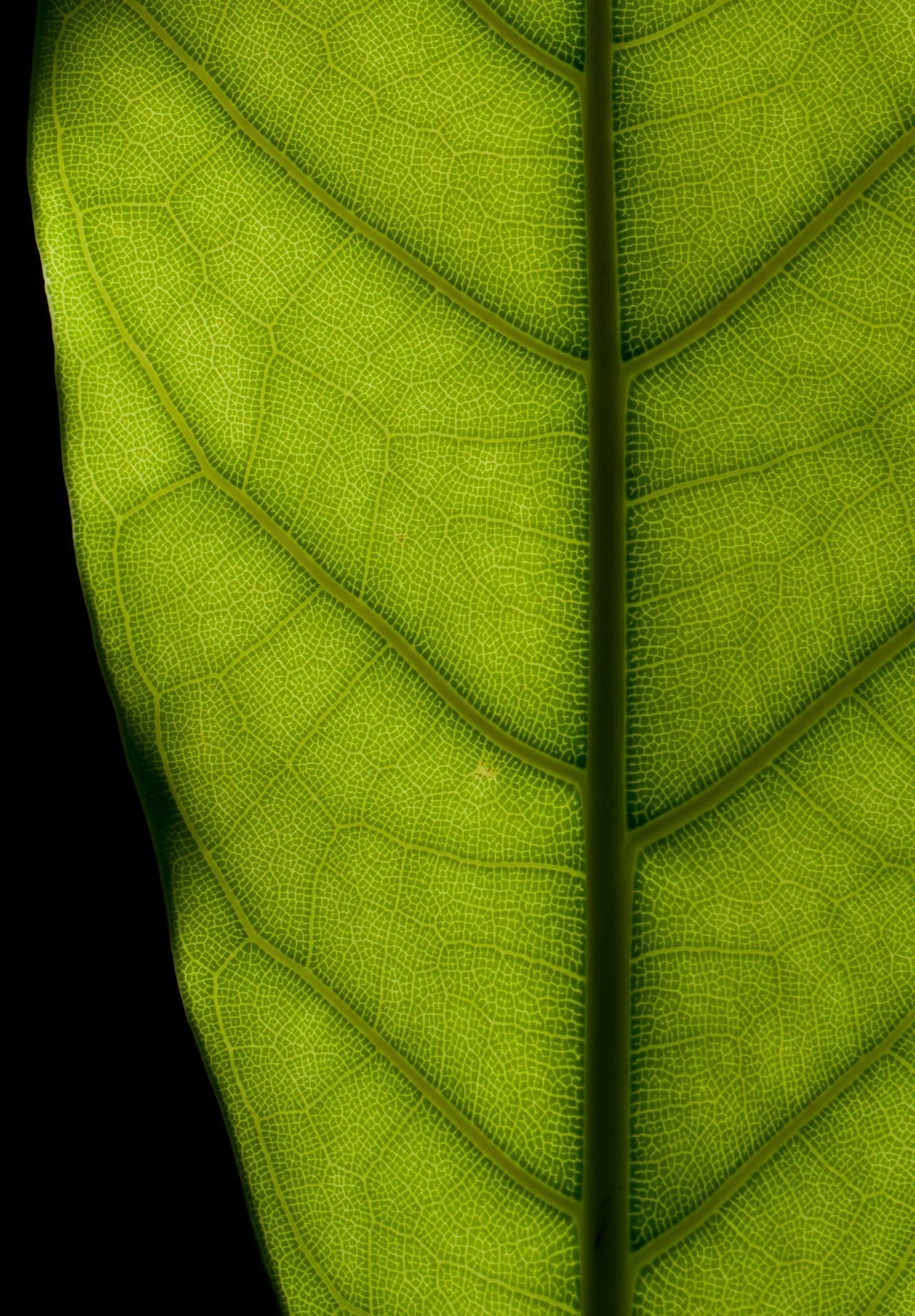
Moraceae
Rubber plant
Ficus elastica
More forgiving cousin of the fiddle leaf fig, the rubber plant accepts variable conditions and tolerates more mistakes. Spectacular foliage, fast growth.
- Difficulty Moderate
- Light Bright indirect
- Watering Once a week
- Toxicity Toxic to cats
© Julian Herzog, CC BY 4.0
Family
Moraceae
Origin
Tropical rainforests of the Indian subcontinent and Southeast Asia
- tropical
- houseplant
- indoor tree
- easy to medium
- glossy foliage
- trendy
The most accessible indoor tree
The rubber plant, scientifically Ficus elastica, has been one of the most cultivated houseplants worldwide since the 19th century. At a time when interior decoration was becoming popular among European middle classes, this plant from India and Southeast Asia offered an ideal compromise: spectacular foliage, fast growth, and tolerance far superior to its cousin the fiddle leaf fig. Even today, it is the ficus recommended by nursery owners to beginners who want a “real” indoor tree.
In its natural habitat, Ficus elastica reaches 30 to 40 meters tall and develops impressive aerial roots that can form living bridges. This is in fact the species that produces the famous living root bridges in the Cherrapunji region of India, where tribal villages weave them over decades. Indoors, contained in a pot, it generally reaches 2 to 3 meters in 5 to 10 years, with regular growth of 30 to 60 cm per year.
The common name “rubber plant” comes from its abundant white latex, formerly used to produce a rudimentary natural rubber before Hevea brasiliensis became the dominant industrial source. This latex remains an important plant feature to know, especially for toxicity and skin irritation.
Why it forgives where the fiddle leaf fig punishes
The rubber plant is markedly more tolerant than the fiddle leaf fig, which makes it a much less risky choice for beginners. Three key differences:
Light adaptation: the rubber plant tolerates medium light without declining. At 1 500-2 000 lux it grows correctly, at 3 000-5 000 lux it thrives. The fiddle leaf fig, however, demands 2 500 lux minimum not to decline.
Watering tolerance: forgetting one week does not kill a rubber plant. Slightly excessive watering either, as long as it is not repeated. The fiddle leaf fig, by comparison, is strictly intolerant of both extremes.
Resistance to variations: a room move, an occasional draft, a 5-8 degree temperature swing are absorbed without drama. Not in the fiddle leaf fig.
In contrast, the rubber plant has a more potent latex and more irritant than most ficus, requiring precautions when pruning and propagating.
The varieties to know
Several rubber plant cultivars exist in garden centers, with slightly different behaviors.
Robusta: the classic green variety, with large glossy deep-green leaves. The most tolerant of all, fastest growth, ideal for beginners.
Tineke: variegated leaves of green and cream, sometimes pinkish on new growth. More light-demanding (variegation reduces chlorophyll, so more light needed to compensate). Slower growth.
Ruby: burgundy to bright pink leaves on young shoots, dark green underneath. Very decorative, but needs lots of light to retain red color.
Burgundy or Abidjan: very dark green leaves, almost black, with a red central vein. Medium growth, more tolerant than Tineke.
Tricolor: the rarest and most delicate. Leaves mixing green, cream and pink. Very demanding in light and stability.
For a first rubber plant, choose Robusta or Burgundy. Reserve Tineke, Ruby and Tricolor for more experienced owners.
Light, watering, substrate
Light remains the most important factor. Ideally, place the rubber plant near an east or west window with sheer curtain. A direct south window can work in winter but burns leaves in summer (acclimate progressively). A north window in the middle of the room can be enough for green varieties (Robusta, Burgundy), not for variegated ones that would yellow in a few months.
The rubber plant tolerates one meter more distance from the window than the fiddle leaf fig. But under 1 500 lux prolonged, even Robusta eventually stretches and loses its lower leaves.
Watering follows the classic rule: test 3-4 cm into the substrate, water when it is dry. This gives around every 7 to 10 days in summer and every 12 to 18 days in winter. See our complete rubber plant watering guide for the precise method.
The substrate must drain correctly: 50 percent quality houseplant potting mix, 25 percent perlite or pumice, 25 percent pine bark. Drainage holes mandatory. Watertight cachepot to avoid, empty the saucer 15 minutes after watering.
For humidity, 40-60 percent suffices. The rubber plant tolerates dry air better than the fiddle leaf fig, but on variegated varieties, a humidifier in winter prevents dry edges.
Fertilizer in spring and summer only: balanced fertilizer diluted to half dose, every 2 weeks. Nothing in winter. Nothing in the 4 weeks following a repotting.
Toxicity: important precautions
The rubber plant produces a particularly irritant white latex, more than most ficus. It contains proteases and calcium oxalate crystals, plus a characteristic sticky resin.
For cats and dogs: ingestion causes heavy drooling, vomiting, oral irritation, sometimes diarrhea. More rarely, in case of significant ingestion, nervous depression and unsteady gait. Details in our dedicated articles toxicity for cats and toxicity for dogs.
For humans: latex in direct contact with skin can cause dermatitis in sensitive individuals, especially those allergic to natural latex (cross-reaction with this tree’s sap). Always wear gloves to prune or take cuttings. If latex touches the eyes, rinse abundantly with water and consult if irritation persists.
The latex remains active even hours after cutting. Wipe tools well, do not put fingers in mouth after handling.
Common problems
The rubber plant is less temperamental than the fiddle leaf fig but develops the same typical problems.
Yellow leaves are almost always linked to watering (excess most often, lack sometimes). See our complete yellow leaves guide for the 5 possible causes.
Brown spots have varied causes: overwatering, drought, sunburn, temperature shock. Details in our brown spots article.
Sudden leaf drop signals important stress (move, draft, thermal shock). See rubber plant dropping leaves.
For pests, the rubber plant is less sensitive than the fiddle leaf fig but still attacked by mealybugs and spider mites in winter. Monthly inspection, neem oil treatment if needed.
When in doubt, the photo decides
Several rubber plant symptoms can look alike (yellow leaves from overwatering or low light, brown spots from drought or shock). Changing several parameters at once is the best way to worsen things. The Spriggo app analyzes a plant photo and identifies the predominant cause in seconds, with an adapted action plan.
Diagnose this plant
-
Diagnosis
Brown spots on rubber plant: identify the exact cause
The shape of brown spots on a rubber plant reveals the exact cause. Brown edges, brown centers, isolated spots: here is the method.
-
Diagnosis
My rubber plant is dropping leaves: rescue protocol
The rubber plant can suddenly drop leaves under stress. Here are the 4 main causes and the emergency protocol for each.
-
Disease
Mealybugs on rubber plant: step-by-step treatment
The rubber plant attracts mealybugs especially in winter. Precise identification, alcohol and neem treatment, durable prevention.
-
Toxicity
Is the rubber plant toxic to cats?
Yes, the rubber plant is toxic to cats, more so than other ficus. Symptoms, severity, what to do if ingested, and solutions.
-
Care
Rubber plant watering: the method that works
Watering the rubber plant is simpler than you think. Here is the precise method, seasonal frequency, signals and mistakes to avoid.
-
Diagnosis
Rubber plant yellow leaves: 5 causes and their diagnosis
The rubber plant yellows for precise reasons. Overwatering, low light, shock, deficiency: how to decide in 3 minutes.
-
Toxicity
Is the rubber plant toxic to dogs?
Yes, the rubber plant is toxic to dogs. Symptoms, real severity, what to do if ingested, and solutions to protect your animal.